




Ask five different contractors what to use for your terrace, and you’ll probably get five different answers, and at least two of them will insist their option is the “best one, guaranteed”. It’s confusing, honestly, especially when you’re just trying to stop water from ruining your ceiling before the next monsoon.
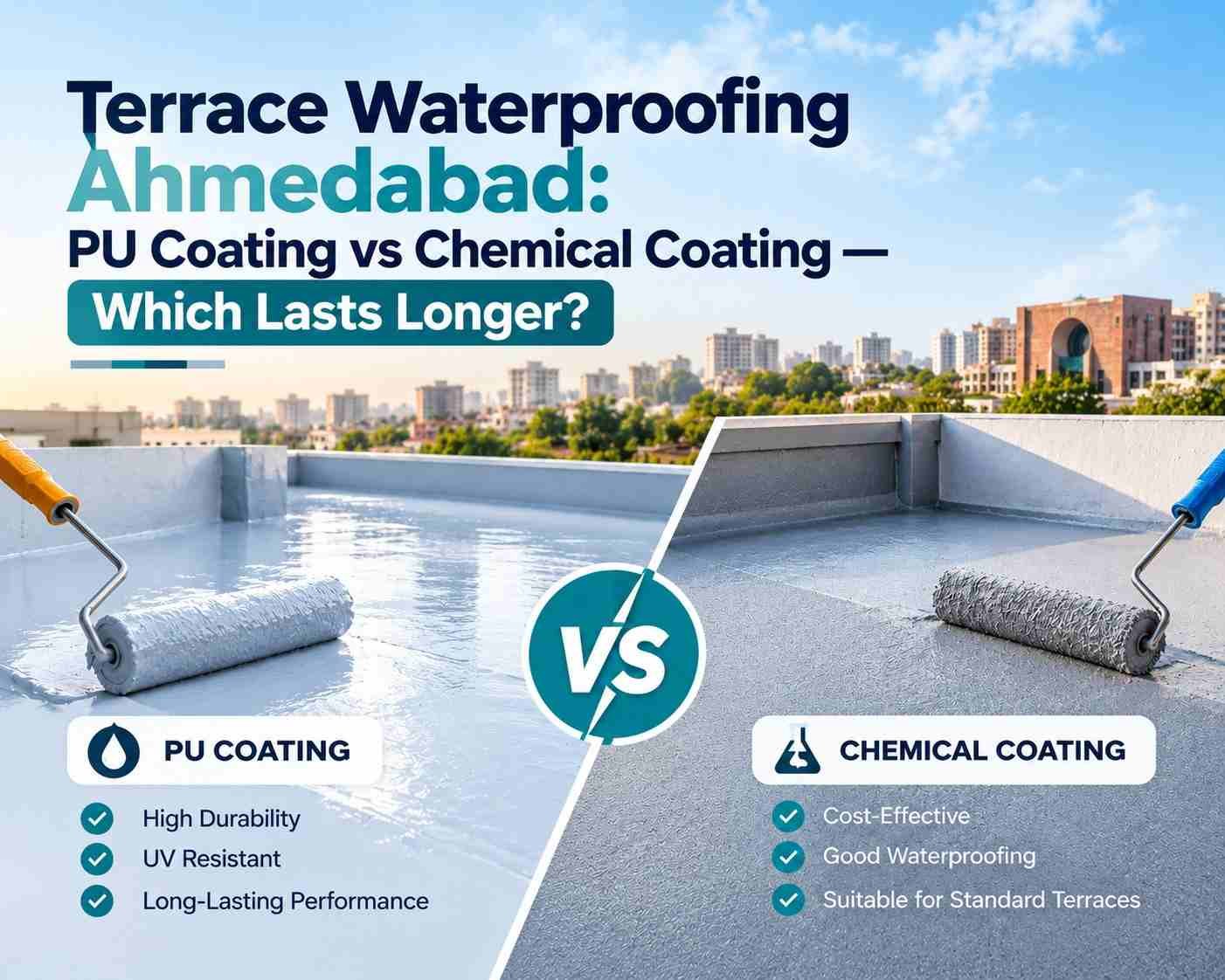
The two options that come up most often for terrace waterproofing in Ahmedabad are PU (polyurethane) coating and traditional chemical or cementitious coating. Both work, but they behave pretty differently once Ahmedabad’s weather gets involved, and picking the wrong one for your situation is a big part of why so many terraces end up leaking again within a couple of years.
What chemical coating actually is
This is the older, more commonly used method. It’s a cement-based waterproofing compound mixed with certain polymers, applied in layers directly onto the terrace surface. It’s cheaper upfront, contractors are familiar with it, and it’s been the default choice for decades.
The problem is that it’s rigid. Once it cures, it doesn’t flex much. And Ahmedabad’s terraces go through serious temperature swings, from over 43°C in peak summer to much cooler nights during winter, plus the constant wet-dry cycle through monsoon. That expansion and contraction puts real stress on a rigid coating, and hairline cracks start forming within a year or two, sometimes sooner if the application wasn’t done carefully.
What PU coating actually is
PU coating is a liquid-applied polyurethane membrane that cures into a flexible, seamless layer. Because it’s elastomeric, meaning it stretches and contracts with the surface instead of resisting it, it handles thermal movement far better. It also forms a genuinely seamless layer with no joints, which matters a lot for terraces since joints are exactly where most leaks start.
It costs more than basic chemical coating, generally speaking, but it also tends to last considerably longer under Ahmedabad’s specific conditions.
So which one actually lasts longer here?
For Ahmedabad specifically, PU coating generally outperforms standard chemical coating, mainly because of that flexibility. A rigid coating cracking under thermal stress is one of the single biggest reasons terraces here start leaking again within just a couple of years of being “waterproofed.”
That said, chemical coating isn’t useless. For terraces with lower foot traffic, less direct heat exposure, or as an additional protective layer over other waterproofing work, it can still do the job reasonably well, especially if applied correctly with proper curing time.
It’s not only about the material though
Even PU coating fails if the surface underneath wasn’t cleaned and prepared properly, if cracks weren’t filled first, or if the slope doesn’t allow water to drain off naturally. A premium material applied over a poorly prepped surface will still fail, just maybe a year or two later than a cheap coating would have.
This is something companies with real hands-on experience across different terrace types tend to get right more consistently. Prakshal Group, for instance, has been working on terrace and structural waterproofing across Ahmedabad for over 20 years, including institutional and commercial sites, and their process typically starts with a proper inspection to figure out which method actually suits the specific terrace, rather than defaulting to whatever’s cheapest to apply.
Quick comparison
| Chemical Coating | PU Coating | |
|---|---|---|
| Flexibility | Low, rigid once cured | High, stretches with surface |
| Typical lifespan | 2-5 years | 7-12 years |
| Cost | Lower upfront | Higher upfront |
| Best for | Low-traffic areas, budget jobs | High heat exposure, long-term use |
| Seamless application | Usually has joints | Fully seamless |
FAQs
Is PU coating worth the extra cost over chemical coating? For most Ahmedabad terraces, yes. The extra upfront cost is usually recovered by not having to redo the waterproofing every 2-3 years, which is common with standard chemical coating in this climate.
Can PU coating be applied over old chemical coating? Sometimes, but it depends on the condition of the existing layer. If the old coating is cracked or peeling, it generally needs to be removed first before PU can be applied properly.
Does PU coating need any special maintenance? Not much. Occasional cleaning to remove debris and periodic inspection for any surface damage is usually enough. It doesn’t require the frequent touch-ups that chemical coating often does.
Which is better for a terrace that’s used regularly, like for drying clothes or gatherings? PU coating tends to handle regular foot traffic better since it’s more flexible and resistant to surface wear, though a proper protective top coat is usually recommended either way for high-use terraces.